
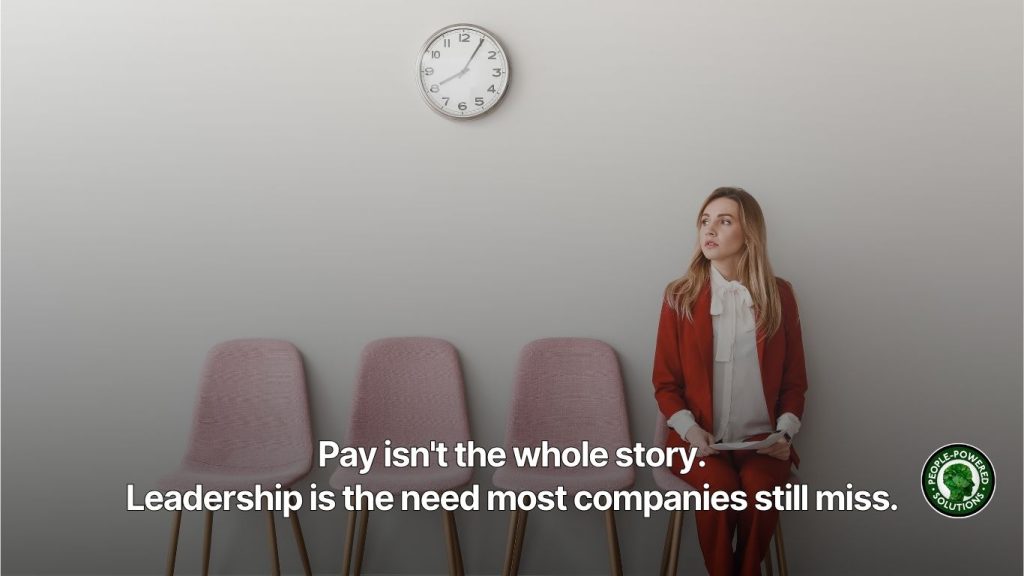
When someone leaves and says it’s for more money, believe them. In a lot of industries, wages have not kept pace with the cost of living, and for plenty of departing employees, that reason is exactly, literally true. Compensation is a real problem. Companies that haven’t adjusted for it are going to keep losing people over it, and no amount of culture work fixes a pay gap.
Here’s the part that gets missed, though. Raise every wage tomorrow, and some employees will still leave within the year. That’s because there’s a second common driver of turnover that a raise never touches: the day-to-day relationship between an employee and their manager. Gallup has been tracking this for more than a decade, and it still holds up in their newest workplace research.
So while employee turnover is a very expensive problem, most retention budgets stop at pay and never touch the manager relationship that’s driving people out the door just as fast.
70%
of the variance in team engagement comes down to the manager (Gallup)
50 to 200%
of an employee’s annual salary is the typical cost of replacing them (SHRM)
3 to 6 months
is the typical ramp-up time before a new hire reaches full productivity
Pay Is a Real Problem, and It Deserves a Real Answer
This part shouldn’t need saying, but it does, because so much retention advice skips past it: if your wages haven’t been benchmarked in a couple of years, that’s worth fixing on its own merits, separate from anything else we discuss here. Cost of living has moved. Comparable roles in your market have moved. If your pay hasn’t moved with them, “better opportunity” isn’t a polite excuse, it’s an accurate diagnosis, and the fix is a compensation review before anything else.
Where this gets expensive is when leadership treats pay as the whole story. It’s often part of the story. It’s rarely the entire one.
The Driver Nobody Budgets For
Gallup’s finding of the manager’s influence on retention holds up across industries, company sizes, and years of data: if you know nothing else about an employee except who they report to, you can predict how engaged they are with real accuracy. The manager relationship is the one thing an employee experiences every day. A compensation review might happen once a year. A bad 1:1, or a missing one, happens every week.
Most managers aren’t struggling with this because they don’t care. They’re struggling with it because nobody gave them the time, the training, or explicit permission to treat the relationship side of the job as real work instead of something to squeeze in between their own deadlines. A lot of managers were promoted for being excellent individual performers and then handed a team with zero instruction about the part of the job that actually keeps a team together. That’s not a personal failing. It’s a gap in what the organization invested in before handing someone the responsibility.
What Actually Moves the Number
This doesn’t require a six-figure culture overhaul. It requires three specific, learnable habits.
A consistent 1:1 rhythm. Not a status update, a short regular conversation where the employee talks more than the manager does. Irregular check-ins tell someone the relationship is optional. Consistent ones tell them they matter enough to have a standing appointment.
Feedback on a schedule, not only when something breaks. An employee who only hears from their manager when there’s a problem starts associating that manager with bad news. A small, deliberate habit of naming what’s going right changes that association over time. And if you don’t make a point of being consistent with providing feedback, it’s very easy to slip and not provide any for long stretches of time.
A stay interview, on purpose, before there’s a reason to hold an exit interview. This is more specific than “check in.” Skip “are you happy here,” which just gets a polite yes. Ask instead: if you left this year, what would the reason be? What part of the role would you drop tomorrow if you could? When did you last feel genuinely challenged? Then, and this is the step most managers skip, pick one thing the person named and change it within 30 days. An answer that gets ignored is worse than a question never asked, because now the employee knows honesty here doesn’t lead anywhere.
Tracking the Pattern Across a Whole Team
One stay interview tells a manager something about one employee. That’s useful on its own. Something bigger happens when HR tracks the answers across an entire team, or better, across every team in the company, over multiple quarters.
Set it up simply. A shared tracker, one row per conversation: what the employee said they’d change, what the manager committed to changing, and whether it actually happened within 30 days. A spreadsheet does the job. No new software required.
After a quarter of this, patterns surface that no single manager could see from inside their own team. If “growth opportunities” keeps coming up as the answer across five different managers, that’s not a coaching note for one person anymore. That’s a finding that gets budget approved, because it’s backed by a pattern instead of a hunch. If one manager’s follow-through rate sits well below everyone else’s, that’s specific, usable feedback for that manager’s own development, not a resignation you write off to “the market.”
This is the piece a single conversation can’t hold. One manager sees one employee. HR, watching the pattern across ten managers, sees the actual shape of the problem, and where a fix would do the most good.
What Getting This Wrong Costs
SHRM puts the cost of replacing an employee at 50 to 200% of their annual salary once recruiting, onboarding, and the three-to-six-month productivity gap are counted. That figure doesn’t include the institutional knowledge that leaves with them, or what it does to the people who stay and watch it happen.
Fix pay and ignore the manager relationship, and you’ll still pay that cost. Fix the relationship and leave wages stale, and you’ll pay it too. Turnover has more than one driver, and most companies are still budgeting for just one of them.
If you’re not sure what’s actually driving risk on your team right now, that’s worth two minutes to find out before it costs you six figures to learn the hard way.
Take the Happiness Factor Culture Check
Or talk it through directly. Book a Power Insights call.
FAQ
Lori-Ann Duguay is a certified leadership coach and the founder of People-Powered Solutions, an HR consulting and leadership development firm serving organizations across Northern Ontario and beyond. She works with managers, HR leaders, and executive teams to build the day-to-day relationships that keep good people from quietly heading for the door.
-
We just did a pay adjustment and people are still leaving. What’s going on?
A pay adjustment fixes pay-driven departures. If turnover continues after wages are competitive, that’s a strong sign the manager relationship is the piece still unaddressed.
-
How do I know if it’s a pay problem or a manager problem?
Look at the pattern, not the individual case. If departures cluster under a specific manager or team even though pay is comparable across the company, the manager relationship is very likely the bigger factor. The Culture Check above is built to help sort this out quickly.
-
We don’t have budget for a big training program. What can we actually do first?
Start with stay interviews and a consistent 1:1 rhythm. Both are free, both take less than an hour a month per employee, and both move faster than almost anything else on this list.
Explore our leadership development programs | Book a discovery call

