The information problem
Most leadership programmes are knowledge transfer exercises. Managers learn about communication styles, psychological safety, how to give feedback. They take notes, discuss case studies, and leave with a framework or two. The assumption is that once they know how to lead better, they will.
But management isn’t a knowledge problem. Your managers already know they should give more feedback. They know they should listen before reacting. They know micromanagement erodes trust. The knowing isn’t the gap. The doing is.
Behaviour change is a practice problem. It requires repetition, feedback in the moment, and a safe enough environment to try new things and get them wrong. A two-day workshop, no matter how well designed, cannot do that work on its own.
“Management isn’t a knowledge problem. The knowing isn’t the gap. The doing is.”
What actually changes how people lead
The research on skill development is pretty consistent. People don’t change how they behave because they attended a session. They change when they practise in real conditions, get honest feedback, and have someone hold them accountable to doing it again.
That sounds simple. In practice, most organisations don’t build those conditions. They send managers to training and call it development. Then they’re surprised when the needle doesn’t move on engagement scores or team performance.
What works looks different. It looks like cohort-based learning where managers work through real challenges with peers, not actors in case studies. It looks like coaching that happens in context, not just during quarterly check-ins. It looks like leaders above the manager modelling the behaviours they’re asking their people to develop. And it looks like the culture giving people explicit permission to try things differently, fail sometimes, and grow from it.
The culture your training is sitting inside
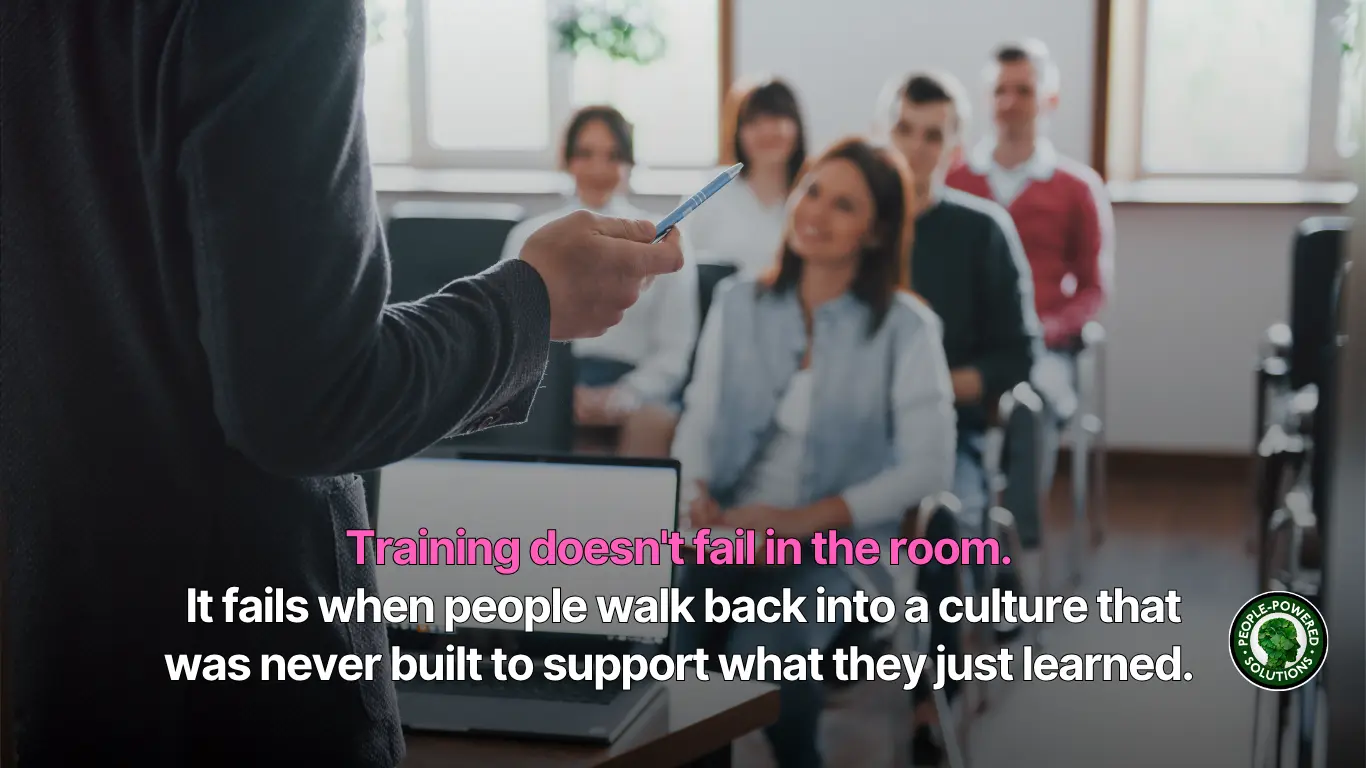
Here’s the part that rarely gets said clearly. Even the best manager development programme will fail if the organisation’s culture works against it.
If a manager learns to create space for open dialogue in a workshop, then goes back to a team where dissent is quietly punished, the training won’t hold. If they practise delegating in a safe learning environment, then return to a workplace where senior leaders override their decisions daily, the habit won’t form.
Training doesn’t happen in a vacuum. It happens inside a culture that either supports or undermines every skill being developed. Organisations that see real returns on their development investment understand this. They don’t just develop their managers. They look honestly at what the system around those managers is doing, and they change that too.
The role of the manager’s manager
One of the most overlooked levers in manager development is the behaviour of the person above. Senior leaders shape what’s actually acceptable in an organisation far more than any L&D programme does.
When a director says they want their managers to empower their teams, then calls those managers ten times a day to check in on progress, the message that lands isn’t the one from the workshop. People watch what those above them do far more carefully than they listen to what they say. That gap between espoused values and actual behaviour is where most development programmes quietly die.
Closing it requires senior leaders to be honest about their own habits. That’s uncomfortable work. It’s also the most important work.
Rethinking what development means
Manager development that works isn’t an event. It’s a sustained practice woven into the rhythm of how your organisation operates. It’s coaching conversations that happen regularly, not just when something goes wrong. It’s peer learning structures that normalise asking for help. It’s feedback culture that makes honest input normal rather than threatening.
None of that requires a bigger training budget. It requires a different understanding of where behaviour change actually comes from. And it requires the willingness to look at the whole system, not just the person standing in front of the whiteboard.
The managers in your organisation want to lead well. Most of them are trying. The question worth asking isn’t whether they attended the right programme. It’s whether the conditions around them make leading well genuinely possible.