Clarity
ACTION PLAN FOR CLARITY
Let’s get you set up to meet your employees’ needs for clearly defined roles, responsibilities and expectations. Use the following tools to start measuring, mapping and mobilizing your workplace culture to empower every employee to say “I know what they expect from me, what I can expect from them and I understand my role and responsibilities!”

OUR TOP TIPS

Set and communicate clear, achievable goals for each team and individual. Don’t forget to confirm that they understand them.

Ensure job roles and responsibilities are well-defined and understood. Confirming understanding is key!

Provide transparent feedback on performance and expectations.
By measuring, mapping and mobilizing targeted initiatives, you can systematically enhance clarity and create a culture that promotes engagement, productivity, and happier employees.
Get started below or book your free call today!
We can help you prioritize and implement these initiatives.
MEASURE
The first step in any transformation is understanding your starting point or baseline. Measuring is how you determine your current state and identify improvement opportunities. Metrics are how we objectively assess the level of clarity across theorganization. This data-driven approach allows for informed decision-making and helps us understand where to prioritize resources and focus when implementing our action plans.
Use multiple sources to measure clarity.
Here are some examples we’ve helped organizations evaluate:
Review existing employee surveys to ensure they include questions related to clarity, such as understanding expectations of their role.
Productivity Key Performance Indicators (KPIs)
Exit Interviews And Stay Interviews
MAP
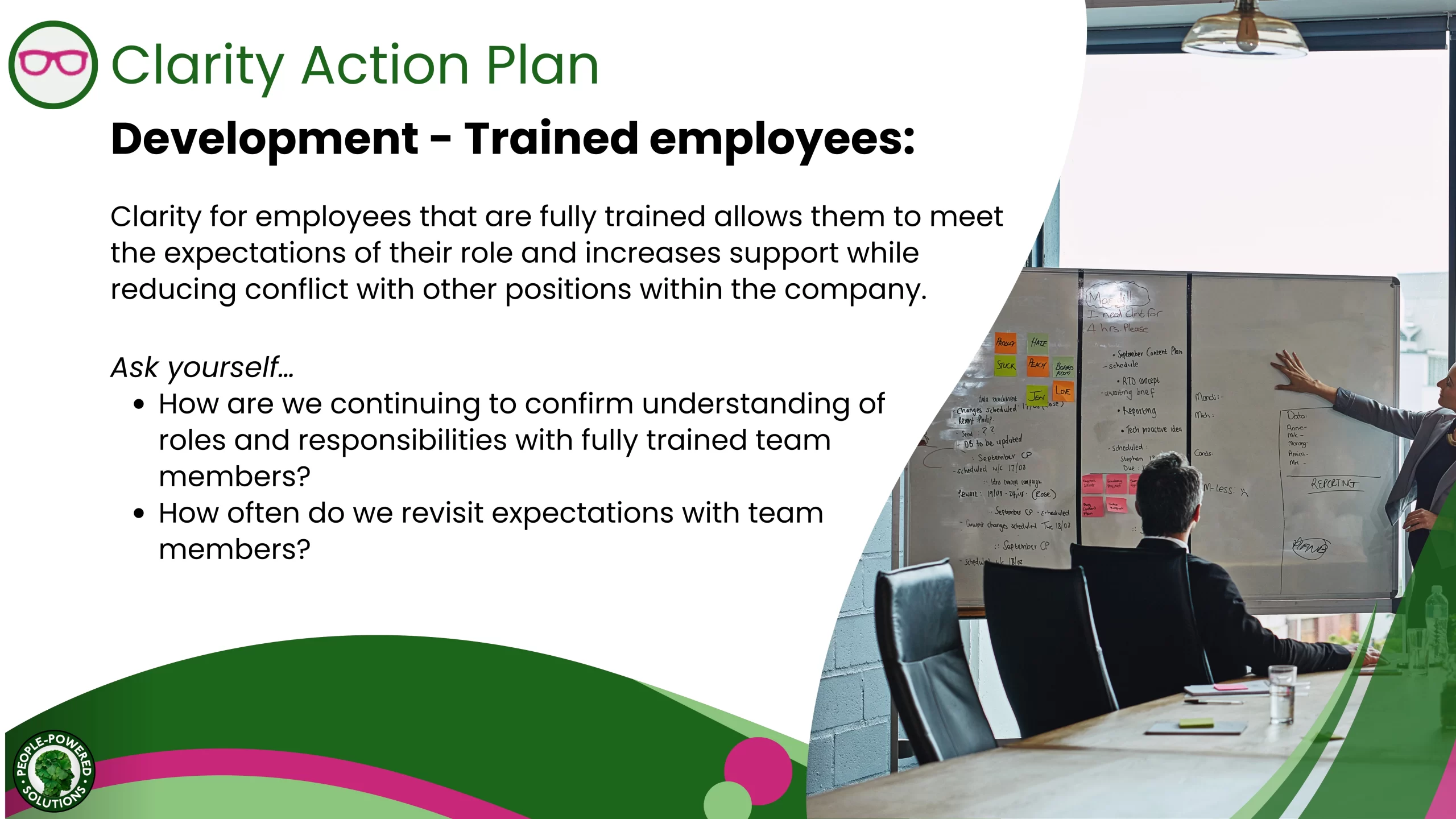
The second step is to map out your existing employee experience and identify your current practices. Reflect on how clarity influences the employee journey at different stages, including recruitment, onboarding, training, career development, and exits. Ensure that clarity is a priority throughout each stage to enhance the employee experience.
MOBILIZE
The final step is to take the information gathered in the first two steps and brainstorm potential initiatives to address gaps, involve employees, and develop a plan with deliverables. Categorize solutions as quick wins, medium, or long-term deliverables and further prioritize where and when you want to start implementation.
Some examples we’ve helped organizations successfully implement to transform their culture:
- Job descriptions: Write and communicate detailed descriptions of each employee’s role and responsibilities to prevent misunderstandings.
- Standard Operating Procedures (SOPs): Establish standard operating procedures for key processes to ensure consistency and avoid misunderstandings or confusion.
- Performance Development Process (PDP): Implement a performance development process that clarifies expectations and goals and assesses to objective performance standards.
- Regular Team Meetings: Design team meeting operating systems to align efforts, engage employees on organizational goals, and address questions.
- Communication Platforms: Develop digital platforms (e.g. SharePoint, Google Sites) to create clear channels for information and enable employees to seek clarification.
Come up with potential initiatives to address gaps at your workplace.
Start My Action PlanHow can I ensure that the roles and responsibilities of my employees are clearly defined and understood within the organization?What steps can I take to communicate clear and achievable goals to each team and individual, and how can I confirm their understanding?How can I provide transparent feedback on performance and expectations to enhance clarity for my employees?Email
KEEP LEARNING ABOUT CLARITY
Secret Ingredient Week 1 – Clarity
There are 3 types of clarity that need to be provided to employees to increase engagement – Clarity of Direction, Clarity of Rules & Tasks, Clarity of Expectations

Clarity Is Important, But Are You Clear Enough?
This article emphasizes the need for greater clarity in the workplace, identifying how much employee time is lost to unproductive activities like excessive meetings and email, indecision, and conflict management. It introduces the concept of ‘disclarity’, a prevalent issue stemming from poorly defined processes and objectives, which contributes significantly to workplace inefficiency.

Why Quality Job Descriptions Still Matter In Today’s World Of Work
In the dynamic landscape of modern work, job descriptions are more than just a list of duties. They are the blueprint for recruitment, engagement, and development. For young and growing companies, they are especially vital, setting the stage for attracting talent that resonates with the company’s mission, values, and culture. They encourage skills-based hiring, focusing on what truly predicts success in a role, rather than on arbitrary qualifications with little bearing on job performance.

Internal Communication Tactics That Drive Employee Engagement
In all of the employee engagement exercises I have ever conducted with clients, communication or lack thereof shows up in the top three complaints from employees. This article provides insight on how to increase the effectiveness of your internal communication to improve employee engagement!